Doing research for the primary sources was actually a lot easier than for the secondary. Because the genre of graphic memoirs is so relatively new, most scholarship I was finding concerning the genre itself also heavily discussed many of the most prominent works. It was interesting, because while one might assume that what unites graphic memoirs is the autobiographical aspect, there is also a pretty strong continuity of theme throughout most of the works I saw discussed. Most of the memoirs I encountered dealt with trauma (whether personal, national, physical, or mental) and many were darker, "coming of age" stories.
Although the secondary sources I found were pretty good at giving a solid look at the genre as a whole, seeing examples first-hand and reading about them was also incredibly helpful to understanding the genre. To sum up what I discovered, it seemed like one of the key ways the genre worked was by giving authors a complex, traditionally marginalized medium with it's own history of subversiveness through which they could tell their own complex stories of trauma, illness, and marginalization. Many deal with issues of mental illness, national tragedy, and abuse, as well as narratives of explorations in gender and sexual identity. Few of the memoirs I encountered could be categorized as "pretty." Instead, they tended to be rather dark, gritty, disturbing, or, at the very least, melancholy and at times uncomfortable (I wouldn't necessarily recommend reading them when you're in a particularly blue mood). Nonetheless, they all looked like incredible reads, especially given the medium's capacity to give readers a very personal look into the embodied experiences of the author, and I haven't yet read a graphic memoir that I have not, in some way, appreciated.
While I found all of the memoirs I read and read about fascinating, I was most intrigued by the ones dealing with illness and embodiment - memoirs like Justin Green's Binky Brown Meets The Holy Virgin Mary, which examines Green's adolscent experiences with OCD while living in a Roman Catholic household, as well as David Small's Stitches, which tells the story of his childhood experience with cancer, subsequent voicelessness, and highly dysfunctional family. I think there was just something about their ability to give me a very personal look into the embodied experience of someone dealing with a difficult physical/mental illness that really captured my attention, even if it was in a sort of disturbed fascination kind of way. I think it's incredible that this genre and its medium can give voice to individuals to really show readers what it feels like to live their lives in ways that I don't think traditional written narratives can.
Below you can find sample images from the books I included in my bibliography to get a sense for the books. I would definitely recommend reading any and all of them - Maus, Fun Home, and Persepolis are all available at the SCU library, and they're fascinating and fast reads!
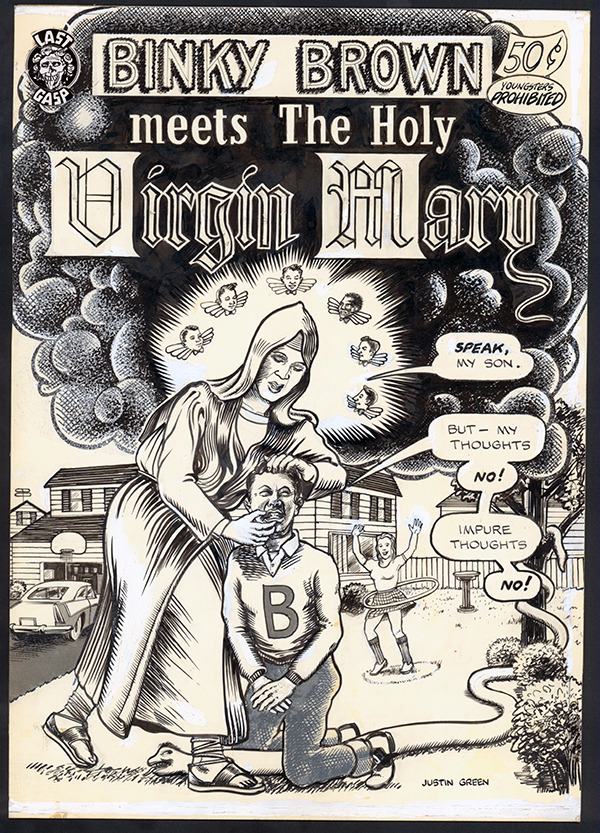 |
| from Justin Green's Binky Brown Meets the Holy Virgin Mary |
 |
| from Art Spiegelman's Maus |
 |
| from Marjane Satrapi's Persepolis |
 |
| from Alison Bechdel's Fun Home |
 |
| from David Small's Stitches |
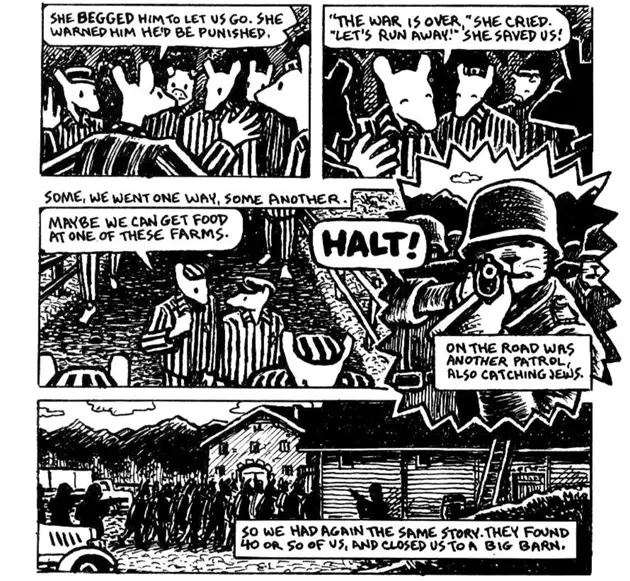
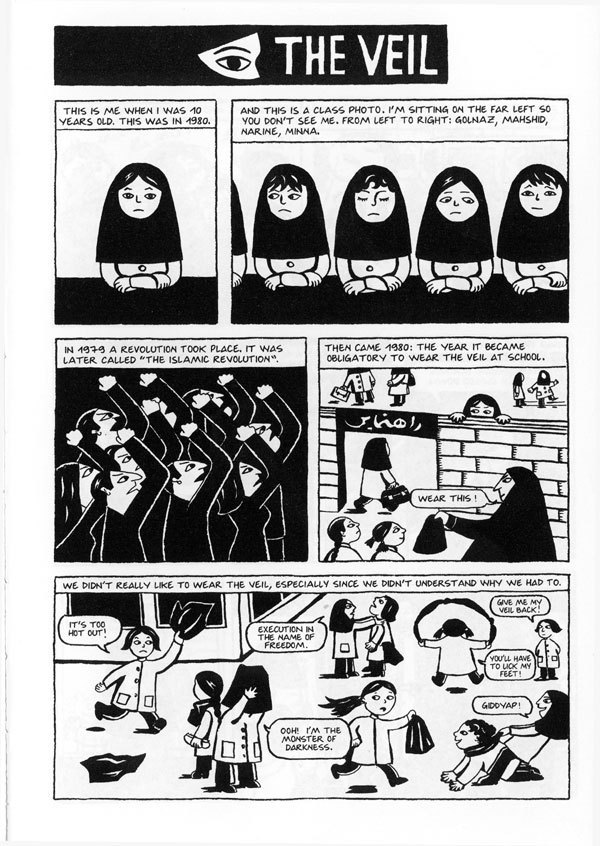


What do you think is the significance of the genre generally covering such dark topics and themes? It is very interesting that a genre, that, when looked at from the outside at a quick glance could seem like a child's book is quite the opposite. What do you think this has to do with the effect on readers?
ReplyDeleteIt was really helpful to look at the images you provided below after reading this post. I found that the first image, from Justin Green's graphic memoir, sum up your observation. It's a dark illustration and the quotes surrounding the image make it even more unpleasant. Following up with Jordan's comment, how do you think it's helpful to write about such difficult topics surrounded by these almost "cartoon-like" illustrations?
ReplyDeleteI believe the thought behind portraying such dark themes as visuals rather than through words alone is to draw out an empathetic response from the reader; an illustration of my point would be to consider two scenarios. First scenario, you pick up your newspaper and read an article about a train accident. Second scenario, you turn on your television and watch a train accident. While you get the same information from both, watching the event take place is far more impactful and leaves the audience with stronger feelings.
ReplyDeleteThat aside, I am glad that you chose to include images, this is the only genre I would consider their inclusion vital to understanding the genre. And the number and variation help to solidify the points you state above.